September 22, 2026 -- September 22, 2026
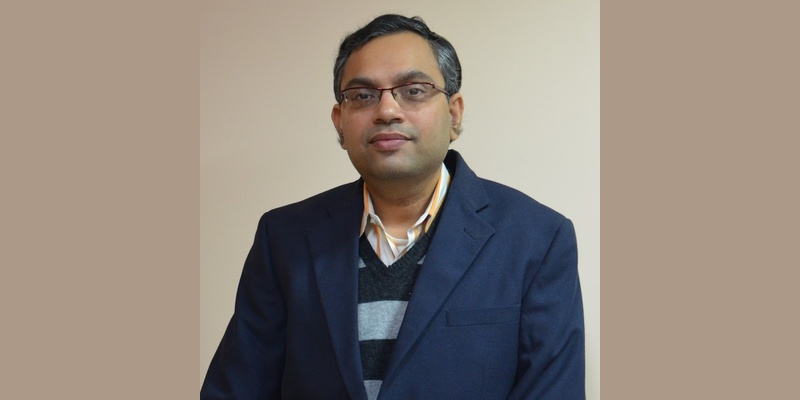
Speaker : Prof. Suman Chakraborty, Dept. of Mechanical Engg., IIT Kharagpur &
Director IIT Kharagpur.
Date & Time: 22 Sep. 2026 Tuesday at 4 PM.
Venue : Faculty Hall, Main Building, IISc.
Engineering Living Matter : From Mechanobiological Microenvironments to Predictive and Precision Healthcare
Living systems do not operate through biochemical signalling alone. Cellular fate, disease progression and therapeutic response emerge from a dynamically coupled microenvironment in which geometry, flow, forces, confinement, tissue compliance, extracellular matrix, physical fields, molecular interactions and time continuously interact. This talk explores a central proposition: if we can engineer enough of the physical world surrounding living matter, can we not only understand biological behaviour, but progressively predict and influence it? The scientific journey therefore follows a continuous progression in which the biological microenvironment is first recreated, then interrogated and controlled, subsequently used for prediction and detection, and finally translated into deployable healthcare technologies.
The discussion begins at the scale of the microcirculation, where a blood vessel is treated not as a rigid conduit but as a deformable, pulsatile and biologically active environment. Fluid-structure interaction, non-Newtonian blood rheology, cellular confinement and physiological waveforms reveal how apparently modest changes in vessel mechanics can reorganize flow and alter what cells actually experience. The framework then advances from recreating the microenvironment to interrogating and controlling it. Cancer-cell rolling and adhesion connect haemodynamic forces with receptor-ligand kinetics, while electrical fields provide a means of perturbing adhesive dynamics. Magnetic nanoparticle transport further demonstrates how therapeutic targeting emerges from competition among magnetophoretic forces, hydrodynamic washout, tissue mechanics and extracellular-matrix resistance. When these interactions are reconstructed within a living tumour-on-chip microenvironment, a broader principle becomes evident: targeted therapy is not solely a question of molecular specificity, but is also fundamentally a transport problem.
The same mechanistic philosophy is then extended from micrometres to the patient. Patient-specific vascular geometries derived from medical imaging, combined with computational fluid dynamics and fluid-structure interaction, transform the human vasculature into a computational laboratory. In aortic dissection, haemodynamic biomarkers are explored not merely to reproduce present anatomy, but to identify regions that may subsequently become prone to thrombosis. The aspiration of a digital twin is therefore to move beyond describing what a clinician can already see and toward anticipating biological vulnerability before it becomes anatomically apparent.
Prediction must be complemented by the ability to read living matter continuously and non-destructively. Label-free impedance monitoring of pseudo-three-dimensional cell cultures, including platforms constructed from unconventional low-cost materials such as commercial photo paper, illustrates how biological observability can coexist with simplified fabrication. At the molecular scale, microfluidic sample processing, nanomaterial-enabled transduction, smartphone imaging and computation are integrated toward rapid point-of-care analysis. The discussion further examines the possibility of moving beyond antibodies by using engineered physicochemical complementarity and amino-acid-based recognition to convert molecular interactions into electrochemical signatures.
Looking forward, this framework evolves from individual biomarkers toward multivariate molecular signatures, multiplexed encoding in both spectral and temporal dimensions, and artificial intelligence that interprets measurements in the context of the individual rather than through population thresholds alone. Importantly, intelligence must include uncertainty: a clinically responsible system should be capable not only of making a prediction, but also of recognizing when the available evidence is insufficient and abstaining from an answer.
Finally, the talk argues that technological sophistication has value only when it survives translation. Using simplified nanoparticle-enabled sample preparation for molecular diagnostics as an example, a philosophy of translation by subtraction is advanced: complexity should increasingly reside inside the science while simplicity appears at the point of use. Across scales, the underlying engineering logic progresses continuously from geometry to flow, from flow to force, from force to transport and ultimately from transport to biological response; at the translational level, mechanism is converted into device, device into validation, validation into decision and decision into patient benefit. The larger opportunity is therefore not simply to engineer better biomedical devices, but to engineer increasingly faithful interfaces with living matter that can reveal mechanisms, anticipate trajectories and enable intervention at the right place, at the right time and, ultimately, for the right patient.
Bio :
Prof. Suman Chakraborty, is currently serving as the Director of the Indian Institute of Technology (IIT) Kharagpur. He holds an additional responsibility of the post of Director of IIIT, Kalyani. He also holds the position of Institute Chair Professor in the Department of Mechanical Engineering, and Sir J. C. Bose National Fellow – one of the highest research distinctions conferred by the Department Research of Science and Technology, Government of India.
Over the course of his distinguished academic and administrative career, Prof. Chakraborty has held several key leadership positions at IIT Kharagpur, including Dean (& Development) and Head of the School of Medical Science and Technology. He is widely recognized for his pioneering contributions to the fields of microfluidics, nanofluidics, microscale transport phenomena, and biomedical engineering, with a particular focus on developing innovative and affordable healthcare technologies for societal benefit.
Prof. Chakraborty is among India’s most accomplished researchers and educators. He was recently conferred the prestigious National Award for Teachers by the Hon’ble President of India in recognition of his outstanding contributions to education, research, and institution building. His international acclaim is reflected through several distinguished honours, including the UNESCO-TWAS Award in Engineering and Computer Science, the Freeman Scholar Award of the American Society of Mechanical Engineers (ASME), and the highly coveted Infosys Prize in Engineering and Computer Science.
In recognition of his exceptional scientific contributions, he was awarded the Shanti Swarup Bhatnagar Prize, one of India’s highest honours in science and technology, and the National Award for Teachers conferred by the Honourable President of India. He has also been featured among the Top 100 Researchers in Asia across all disciplines by Asian Scientist Magazine and has been ranked as the leading researcher in Mechanical and Aerospace Engineering in India by Research.com.
A globally respected scholar, Prof. Chakraborty has been elected Fellow of the American Physical Society (APS), Fellow of the Royal Society of Chemistry (RSC), and Fellow of the American Society of Mechanical Engineers (ASME). He is also a Fellow of all the major Indian National Academies of Science and Engineering, a distinction held by only a select group of researchers in the country.
His contributions to science and engineering have earned him numerous other accolades, including the G.D. Birla Award for Scientific Research, the NASI-Reliance Platinum Jubilee Award for Application-Oriented Research, the Rajib Goyal Prize for Young Scientists, the Indo-US Research Fellowship, the Elsevier Scopus Young Scientist Award, and several Young Scientist and Young Engineer Awards from leading national academies. He has also been honoured with the Outstanding Teacher Award by the Indian National Academy of Engineering.
An Alexander von Humboldt Fellow and Visiting Professor at several leading international universities, Prof. Chakraborty has built an extraordinary body of scholarly work comprising more than 590 publications in reputed international journals, over 20,000 citations, and numerous patents and licensed technologies. His work has consistently bridged the gap between fundamental research and practical societal applications, particularly in the domains of healthcare innovation, point-of-care diagnostics, and technology solutions for underserved communities.
Through his exemplary contributions to research, innovation, education, and leadership, Prof. Suman Chakraborty continues to play a pivotal role in advancing India’s scientific and technological ecosystem while fostering impactful collaborations between academia, industry, and the government towards fostering national and global prosperities.