
Over the past couple of decades, there has been increasing focus in the chemical engineering community towards connecting material properties measured at the macroscopic level with the intermolecular interactions of the constituent molecules.
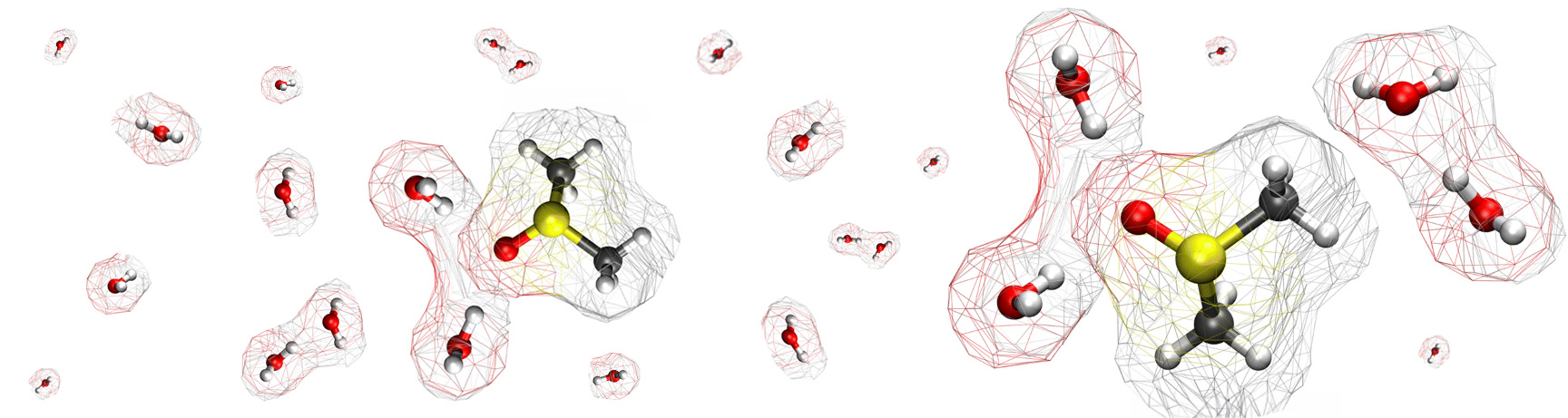
A variety of developments such as faster computers, realistic force-fields and sophisticated algorithms, have spurred the use of statistical mechanics and molecular simulations towards such research. The Supercomputer Education and Research Centre (SERC) at IISc houses the CRAY XC40 which provides a 1 petaflop computing facility serving the entire campus community. In our department, faculty have been using these tools for research in a wide variety of areas.
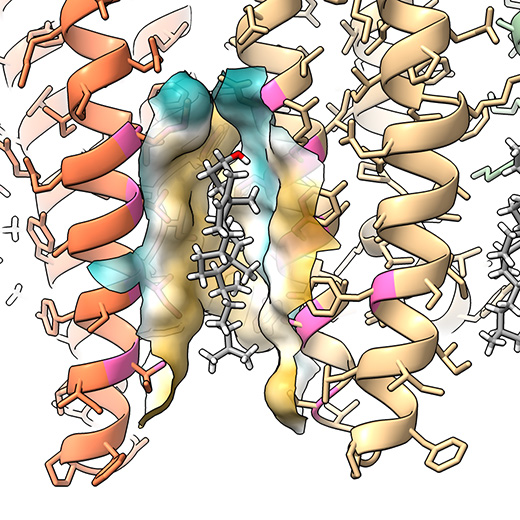
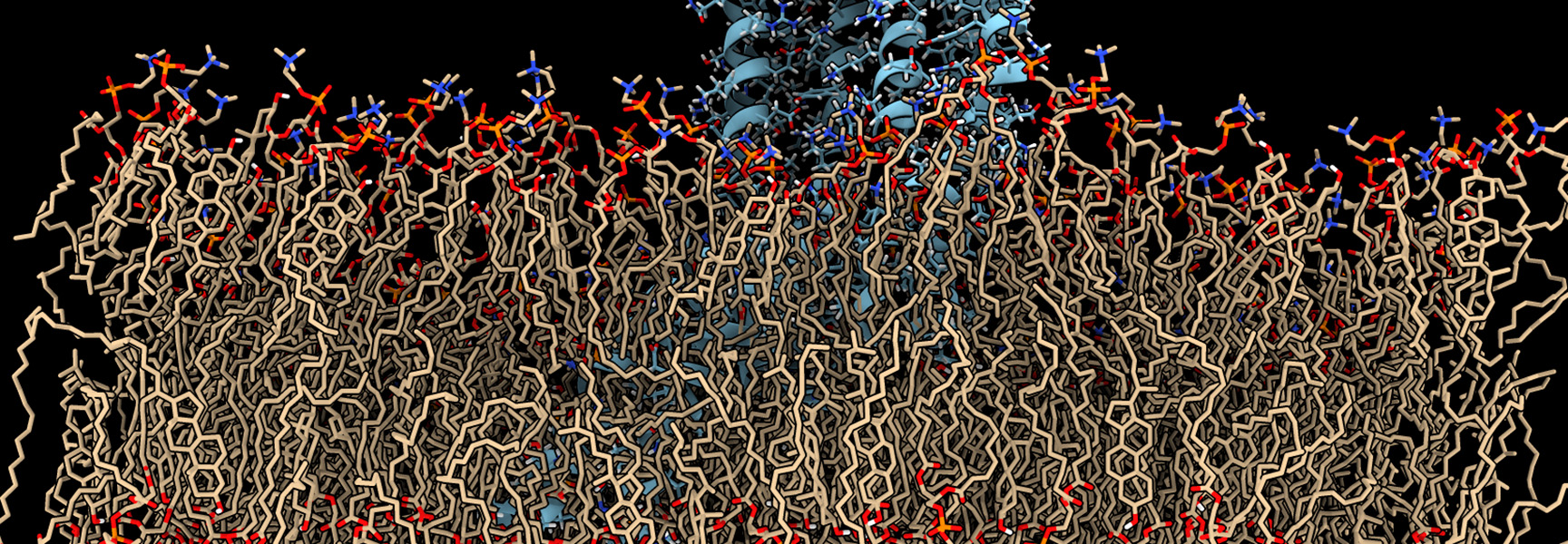
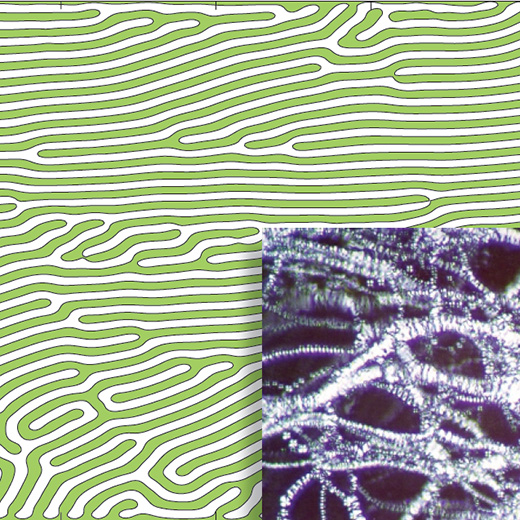
Atomistic molecular dynamics simulations of the lamellar phase are used to extract structural and mechanical properties which are input into large scale Lattice Boltzmann simulations to unravel the rheology of these complex mesoscale systems and connect macroscopic rheology with molecular constituents. Ayappa and co-workers have used atomistic as well as coarse grained molecular dynamics simulations to study the interaction of pore forming toxins with lipid bilayers. Micro-second long atomistic simulations of systems with over half a million atoms have been used to reveal interactions of proteins with membrane cholesterol, stability of partially formed oligomers, dynamics of lipid molecules and mechanical properties of membranes.

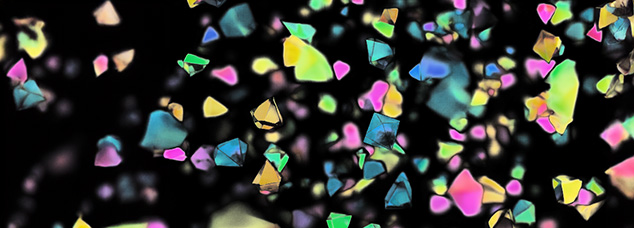
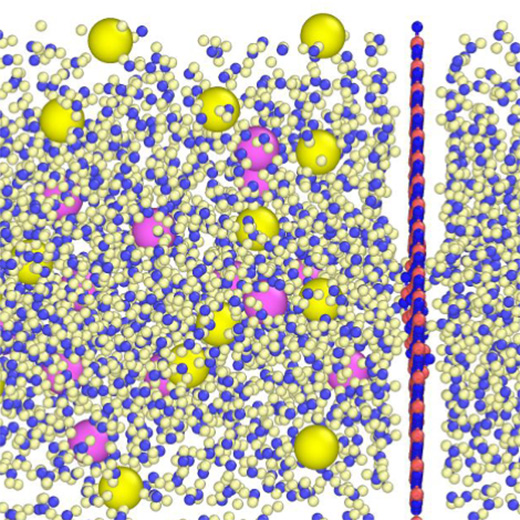
Punnathanam and Ayappa Labs have examined the role of organic functional groups in microporous carbons towards enhancing (i) adsorption of methane for gas storage and (ii) adsorption selectivity of carbon-dioxide from flue gases for carbon-capture and sequestration applications. Punnathanam and co-workers have performed extensive simulations of gas hydrates and have developed an improved and thermodynamically consistent theory for clathrate hydrates. Crystal nucleation is a complex phenomena which is very hard to probe experimentally. The Punnathanam group have studied crystal nucleation in hard sphere mixtures and elucidated the non-classical mechanism involved during phase transformation from a fluid phase to a crystalline phase. The Punnathanam group have also developed new simulation techniques for (i) simulation of electric double layer capacitors and (ii) calculation of free-energies of crystalline molecular solids. Understanding phenomena at the molecular scale allows one to tailor products using a bottom-up approach. Multiscale modelling strategies which bridge molecular level information with continuum transport models to study rheology of complex fluids that are ubiquitous in the beauty care industry are being pursued in the Kumaran laboratory.